
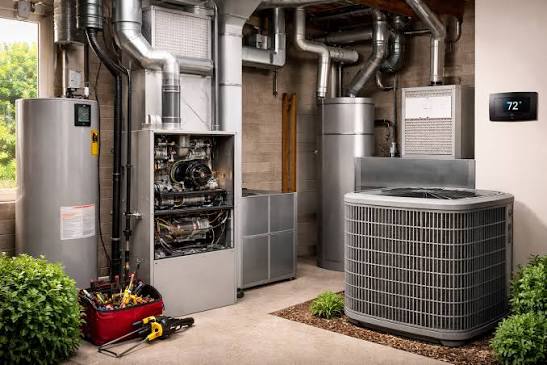
Your HVAC system may still be cooling your home while quietly developing problems that can become much worse during peak summer demand. A weak capacitor, dirty condenser coil, restricted airflow, loose electrical connection, drainage issue, or refrigerant problem may not stop the system today, but each can affect comfort and equipment performance. In Bastrop, TX 78602, preparing your AC before heavy cooling demand is a practical way to find these issues while there is still time to address them. In our field experience, the best time to inspect an HVAC system is before it is forced to run for long hours every day. IcyHot AC can evaluate your system, identify warning signs, and help you decide what needs attention before a small issue becomes an inconvenient breakdown.
Core Introduction to Pre-Season HVAC Tune-Ups
A pre-season HVAC tune-up should involve more than changing the filter or looking at the outdoor unit. A proper service visit can include inspection of electrical connections, capacitors, motors, coils, airflow, condensate drainage, thermostat operation, and refrigerant-side performance where appropriate. The exact checks depend on the equipment type, age, manufacturer specifications, and service history. A split AC, heat pump, packaged unit, and older central system do not necessarily require identical procedures. The purpose is to establish a useful operating baseline and identify conditions that could lead to poor cooling, excessive cycling, unusual electrical load, or unexpected shutdowns. A professional should explain what was tested, what was found, and which recommendations actually need attention.
Why This Matters for the Local Area / Target Audience
Bastrop’s hot weather can put substantial demand on residential and commercial HVAC equipment. When an AC system starts running for extended periods, weaknesses that were barely noticeable during milder weather can become obvious. A tired capacitor may struggle during repeated starts. A dirty condenser coil can reduce heat rejection. Poor airflow can make rooms feel uneven while the system runs longer. A partially restricted condensate drain can become a water problem. Property managers have another concern: one neglected unit can generate tenant complaints and emergency service requests. Small businesses can face uncomfortable work areas or interruptions. What we typically see on the ground is that owners notice the warning signs but wait because the equipment still produces cool air. Pre-season service gives them an opportunity to investigate before peak demand.
A Real-World Scenario or Example
In our field experience, a common service call starts with a homeowner saying, “The AC worked fine last year.” During inspection, the equipment may still start and cool, but the technician finds a capacitor outside its rated range, heavy debris on the condenser coil, or a condensate drain beginning to restrict. None of those findings necessarily means the system needs replacement. They do mean the equipment deserves attention before it operates continuously during a hot spell. In another situation, a system may show normal supply air but draw more current than expected because of operating conditions that need investigation. The important lesson is that a tune-up should not be treated as a quick visual check. Measurements and equipment-specific testing provide much better evidence about system condition.
How a Pre-Season HVAC Tune-Up Actually Works / The Core Process
A proper tune-up follows a logical sequence. The technician begins with the homeowner’s concerns and the equipment history, then performs a visual inspection before taking operating measurements. Electrical components, motors, controls, airflow, coils, drainage, and refrigerant conditions are evaluated as appropriate for the system. The equipment is then operated through a cooling cycle so performance can be observed under actual load. Useful measurements may include supply and return temperatures, voltage, amperage, static pressure, and refrigerant readings when applicable. Rather than relying on generic numbers, the technician should compare findings with manufacturer specifications and the equipment’s design. This approach helps separate normal operating variation from a genuine fault. It also gives the owner a clearer record for future maintenance and troubleshooting.
The Initial Phase / Preparation
Preparation starts with identifying the HVAC equipment. Model and serial numbers can help determine equipment age, capacity, refrigerant designation, and factory specifications. The technician should ask about previous repairs and recent changes in performance. Useful details include longer cooling cycles, unusual noises, weak airflow, warm rooms, frequent starts, water near the indoor unit, or previous breaker trips. The outdoor unit should be inspected for debris, vegetation, corrosion, damaged panels, and blocked airflow. Indoor components should be checked for filter condition, drainage issues, coil contamination, and airflow restrictions. This stage establishes the background for technical testing. A good technician should not treat every HVAC system exactly the same way. The equipment’s age, design, operating history, and current symptoms should guide the inspection.
The Execution / Implementation Phase
During active testing, the system is operated and measurements are taken under normal conditions. Electrical checks can reveal weak capacitors, unstable voltage, damaged terminals, or abnormal motor current. Airflow testing can identify restrictions that affect comfort and system performance. Coil inspection shows whether dirt or debris is interfering with heat transfer. The condensate system is checked for proper drainage. Refrigerant-side testing may be appropriate when there are signs of a leak, incorrect charge, or other refrigeration problems. The technician should document relevant readings and compare them against manufacturer data. After the inspection, findings should be separated into urgent repairs, recommended maintenance, and conditions that can reasonably be monitored. This keeps the service conversation clear and prevents minor observations from being confused with serious equipment failures.
Technical Specifications or Deep-Dive Details
A technical HVAC tune-up can involve several measurements, including static pressure, temperature differential, compressor amperage, capacitor microfarads, supply voltage, refrigerant pressures, superheat, and subcooling. These readings should never be interpreted in isolation. For example, a temperature difference across the indoor coil does not automatically prove that the refrigerant charge is correct. Static pressure can provide clues about airflow restrictions, while amperage compared with equipment ratings can reveal abnormal electrical loading. A capacitor tester can determine whether a run capacitor is within its specified tolerance. Digital temperature probes can help track system behavior more accurately. The technician’s job is to connect these measurements with the equipment’s operating conditions and manufacturer requirements. That is much more useful than declaring a system “good” based only on whether cold air comes from the vents.
Core Benefits and ROI
The main benefit of pre-season maintenance is early information. A tune-up cannot guarantee that an HVAC component will never fail, but it can identify conditions that deserve attention before the equipment faces sustained cooling demand. A dirty coil, weak capacitor, restricted airflow, poor drainage, or abnormal electrical reading may be easier to address before the system becomes an emergency. For homeowners, this can reduce uncertainty. For property managers, maintenance records can help plan repairs across multiple units. For small business owners, identifying issues before peak operating hours can make scheduling easier. The EPA recommends seasonal preparation and maintenance of cooling equipment, including keeping outdoor units clear and cooling coils clean. A professional inspection adds system-specific testing to that basic care.
Financial, Strategic, or Time-Saving Advantages
Preventive service can help owners avoid some emergency situations, but its bigger value is better planning. If a technician finds a weak capacitor before peak season, the owner can decide whether to replace it under normal conditions. If an older system shows declining performance, the owner has time to research replacement options instead of making a rushed decision after a breakdown. Property managers can group service work and maintain records for each unit. Business owners can schedule HVAC work around operating hours. A tune-up can also reveal when a system needs a deeper diagnostic rather than routine maintenance. The purpose is not to recommend every possible repair. It is to identify actual conditions, explain their impact, and allow the customer to decide what action makes sense.
Specific Data Point or Metric to Consider
One useful metric is static pressure because abnormal readings can indicate airflow restrictions. Another is operating amperage compared with the equipment’s rated information. Supply and return temperature measurements can provide a performance baseline, while refrigerant readings may help assess system operation when interpreted with the correct equipment data. These values become more useful when recorded over time. If the same unit shows a gradual change in operating current, airflow, or temperature behavior, that trend may deserve investigation. A single measurement rarely tells the complete story. Outdoor temperature, indoor load, refrigerant type, metering device, duct design, coil condition, and equipment specifications all influence readings. A technician should therefore document the operating conditions along with the measurements rather than presenting one number as proof that the entire system is healthy.
Common Industry Challenges & Roadblocks
One common challenge is confusing basic maintenance with a full technical tune-up. Changing a filter can help airflow, but it does not test electrical performance, condensate drainage, refrigerant conditions, or motor operation. Another problem is using generic pressure or temperature targets without considering the manufacturer’s specifications. Outdoor conditions and system design can change normal readings. Access can also be difficult in older homes, attic installations, crowded mechanical rooms, and rooftop systems. Property managers may struggle to schedule several units before peak season. Homeowners sometimes delay service because the AC still cools. In our field experience, the better approach is to inspect the system while it is operational, record useful measurements, identify real deficiencies, and separate urgent repairs from recommendations that can be planned.
Choosing the Right Solution / Professional
Choosing an HVAC professional means looking beyond a basic tune-up label. Ask what the service actually includes and whether the technician will take operating measurements. Texas regulates air-conditioning and refrigeration contracting through the Texas Department of Licensing and Regulation. TDLR states that contractors performing ACR contracting work must hold the applicable license, while technicians assisting licensed contractors must meet registration or certification requirements and work under licensed supervision. A useful service visit should also produce understandable documentation. Ask whether the technician will record electrical readings, airflow findings, refrigerant-related observations, and equipment deficiencies. IcyHot AC can provide HVAC service for homeowners and property owners in the Bastrop area. The important thing is to select a provider that can explain what was inspected and why a recommendation was made.
Key Credentials or Features to Look For
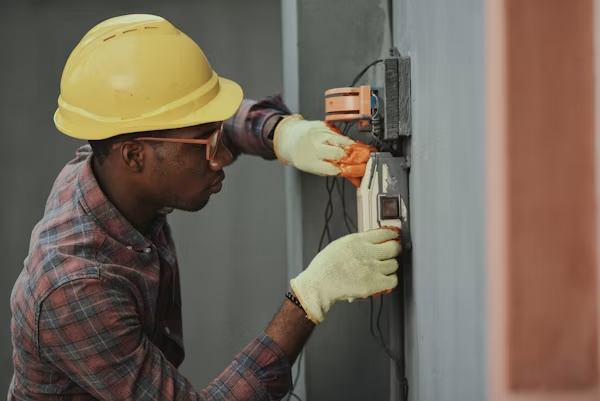
Start by checking whether the contractor has the appropriate Texas ACR license for the work being offered. TDLR identifies Class A and Class B contractor licenses, with Class A covering systems of any size and Class B covering cooling systems up to 25 tons and heating systems up to 1.5 million BTUs per hour. Technicians working under licensed contractors must also meet applicable registration or certification requirements. Beyond licensing, look for technical habits. A strong technician should inspect the system, take appropriate measurements, use manufacturer data, explain deficiencies, and document the work. Do not assume a long checklist automatically means better service. What matters is whether the inspection produces useful information about your specific equipment and whether recommendations are supported by actual findings.
Crucial Evaluation Questions
| Question to Ask | Why It Matters |
|---|---|
| What does your tune-up include? | Shows whether the service goes beyond a basic visual inspection. |
| Will you measure electrical performance? | Helps identify weak capacitors, voltage issues, and abnormal current. |
| Will you check airflow and static pressure? | Can reveal restrictions affecting comfort and equipment operation. |
| Will you inspect drainage and refrigerant conditions? | Helps identify issues that may cause cooling problems or water damage. |
| Will you provide a written report? | Gives you a record of findings and recommended work. |
These questions make it easier to compare HVAC providers on service quality rather than price alone. If the technician recommends a repair, ask what measurement or observation supports the recommendation. You can also ask whether the issue affects safety, cooling performance, equipment life, or efficiency. A good service conversation should leave you understanding the condition of the system. If a technician cannot explain why a repair is needed, ask for more detail before approving significant work. For larger repairs, getting more than one written bid can also help you compare the scope of work and avoid making a decision based only on an advertised starting price.
Understanding the Investment / Pricing Structure
The cost of an HVAC tune-up depends on equipment type, system size, accessibility, age, condition, and the inspection scope. A basic residential system may require less time than a multi-zone commercial setup. A system with heavy contamination or difficult access may require additional labor if cleaning is included. If the technician discovers a failed component, that repair is normally separate from the maintenance inspection. Ask what the initial appointment covers before work begins. A clear scope should explain whether cleaning, electrical testing, airflow testing, refrigerant diagnostics, drain service, and written documentation are included. The lowest advertised price does not always provide the most useful service. The better comparison is the actual work performed and the information you receive afterward.
Breakdown of Base Costs or Resources Required
A professional tune-up may require electrical meters, clamp meters, temperature probes, static-pressure equipment, refrigerant instruments, coil-cleaning tools, condensate equipment, and manufacturer service information. Labor includes inspection, equipment operation, measurement, cleaning where included, documentation, and communication with the customer. Commercial systems and difficult-to-access equipment can take longer. If a repair is identified, parts and additional labor should be clearly separated from the maintenance visit when possible. This makes the invoice easier to understand and gives the owner a better picture of what the tune-up actually discovered. For example, a maintenance visit may reveal a weak capacitor, but replacing that capacitor is a separate corrective action. Clear scopes help prevent confusion between preventive maintenance and repair work.
Hidden Fees or Unexpected Resource Drains
Unexpected costs usually arise from repairs discovered during the inspection. A technician may find damaged wiring, a failed capacitor, a clogged condensate line, refrigerant leakage, a contaminated coil, or a motor problem. Some conditions require additional labor or parts. That does not mean every recommendation needs to be approved immediately. Ask what happens if the repair is postponed and whether continuing to operate the equipment could create a larger risk. Also confirm whether any cleaning or diagnostic work falls outside the original tune-up scope. TDLR’s consumer guidance recommends getting written bids or estimates and checking contractor licensing before hiring. For significant repairs, written documentation helps you compare the actual scope rather than relying on a verbal promise.
Pro Tip for Saving Money / Maximizing Efficiency
Schedule your HVAC tune-up before the system enters its busiest cooling period. This gives you time to investigate a recommendation instead of making a rushed decision during a breakdown. When a technician identifies a problem, ask three simple questions: What failed? What evidence shows it failed? What happens if I wait? Those questions help separate urgent repairs from routine recommendations. Keep the service report because future technicians can use it as a reference. If the system is older, ask about the condition of major components before investing heavily in one repair. A preventive inspection should help you plan, not pressure you into buying work you do not understand.
Step-by-Step Implementation Guide
Start by identifying every HVAC system on the property and noting its age, model, service history, and known complaints. Next, inspect only the items that are safe for a homeowner to access, such as the thermostat, accessible filter, and area around the outdoor condenser. Look for obvious debris or vegetation that could obstruct airflow. Then schedule professional maintenance before sustained cooling demand begins. During the appointment, ask the technician to evaluate electrical operation, airflow, coils, drainage, and refrigerant conditions as appropriate. After testing, divide the findings into urgent repairs, recommended maintenance, and items to monitor. This simple structure prevents every observation from sounding like an emergency. For multiple properties, keep a separate service record for each unit so recurring problems are easier to identify.
What to Do First
Begin with the symptoms. Has the AC become louder? Does one room stay warmer? Is the system running longer? Does the outdoor unit struggle to start? Are you seeing water near the indoor equipment? Write these details down before the technician arrives. Check the accessible air filter and replace it if it is dirty and the equipment’s instructions call for replacement. Keep plants, boxes, and other obstructions away from the outdoor condenser. Do not remove electrical covers or attempt refrigerant work. If the system repeatedly trips a breaker, produces a burning odor, or makes severe mechanical noise, turn it off and request professional service instead of repeatedly restarting it. Those symptoms can indicate a condition that needs attention before routine maintenance.
Tools, Documents, or Prerequisites Required
Homeowners mainly need access to the equipment, the model and serial information if available, and previous service records. A professional technician may use a digital multimeter, clamp meter, temperature probes, static-pressure tools, capacitor tester, airflow equipment, refrigerant instruments, and coil-cleaning tools. Manufacturer data is also important because operating targets vary by system. The technician should know the equipment’s refrigerant type and electrical ratings before making adjustments. Texas requirements also matter. TDLR states that individuals assisting licensed ACR contractors with maintenance or repair must register as technicians unless an exemption applies, and technicians work under licensed contractor supervision. Proper preparation helps make the appointment more productive and gives the technician enough information to establish a meaningful operating baseline.
Expert Strategies for Maximum Value
Use your HVAC maintenance records as a long-term performance history. If a system repeatedly shows capacitor problems, airflow restrictions, refrigerant concerns, or unusual electrical readings, those patterns can be more important than one isolated visit. For property managers, use the same reporting format across units so results can be compared. Another useful strategy is to separate cleanliness from system performance. A clean condenser coil is helpful, but it does not prove that the compressor, blower, electrical circuit, refrigerant system, or ductwork is operating correctly. The equipment should be tested under operation. Record meaningful readings when appropriate and compare them during future visits. This turns routine maintenance into a useful source of information for repair planning and eventual equipment replacement.
Top Mistakes to Avoid
Waiting until the AC stops working is one of the most common mistakes. Another is assuming that replacing the filter means the HVAC system has received complete maintenance. Homeowners may also ignore new noises, longer cycles, uneven cooling, or water around the indoor unit because the system is still running. Property managers can miss patterns when several tenant complaints are handled as separate events. Another mistake is choosing a tune-up solely because it has the lowest advertised price. A low-cost visit may not include the testing you actually need. The goal of maintenance is not to generate a long list of repairs. It is to understand system condition, identify genuine deficiencies, and decide what deserves attention before the equipment is placed under heavy seasonal demand.
Mistake 1 and Exactly How to Prevent It
Mistake 1: Assuming that a working AC does not need a tune-up. HVAC components can weaken without immediately stopping the system. A capacitor can drift from its rated value, airflow can decline, electrical connections can develop heat damage, and condensate drainage can become restricted while the system continues cooling. Prevent this by scheduling a professional inspection before peak demand and asking for actual operating information. The technician should assess the system based on its design and manufacturer requirements rather than simply confirming that cold air is coming from the vents. If a problem is found, ask for evidence and an explanation of its impact. This keeps maintenance focused on real equipment conditions instead of assumptions.
Maintenance, Longevity, and Long-Term Care
Good HVAC care continues after the pre-season inspection. Filters should be checked according to household conditions and equipment requirements. Outdoor units should remain clear of heavy debris and vegetation. Unusual sounds, odors, longer cooling cycles, weak airflow, or repeated starts should be reported rather than ignored. Condensate drainage should also be monitored for unexpected water. Professional inspections can establish operating data that becomes useful during future service. Preventive maintenance cannot stop every component from aging, but it can help identify conditions that deserve attention while the system is still functioning. For homeowners, this can make repair decisions less rushed. For property managers, consistent records make it easier to track equipment across multiple buildings. For businesses, planned service can reduce disruption during critical operating periods.
Daily, Weekly, or Ongoing Best Practices
Homeowners can perform several safe observations without opening electrical compartments. Check accessible filters regularly and follow the equipment manufacturer’s replacement guidance. Keep supply and return vents unobstructed. Make sure the outdoor condenser has room for airflow. Listen for new buzzing, rattling, grinding, or repeated clicking. Watch for water where it normally should not be. Pay attention if the system begins running much longer than before or if certain rooms become harder to cool. Property managers should document tenant complaints and recurring temperature problems. These observations can help technicians identify patterns. Do not bypass safety controls, open electrical panels, or attempt refrigerant work. If a breaker repeatedly trips or the equipment shows signs of electrical damage, shut the system down and arrange professional evaluation.
Insider Hack for Long-Term Success
Create one simple maintenance record for each HVAC system. Include the installation date, model and serial numbers, refrigerant type, major repairs, filter changes, professional inspections, and any important measurements. If a technician records operating amperage, static pressure, temperature conditions, or refrigerant data, keep those records. Over several service visits, this information can reveal changes that are difficult to notice from memory. Repeated capacitor failures, recurring refrigerant service, declining airflow, or increasing electrical load may affect future repair decisions. For rental properties and small businesses, this record also saves time when a different technician handles the next service call. A few minutes spent keeping accurate records can make future diagnostics more focused and equipment planning much easier.
Comparing Alternative Options
There are two basic ways to manage HVAC problems: reactive repair and preventive maintenance. Reactive service waits until something fails, while preventive maintenance checks the equipment before peak demand. Neither approach guarantees a breakdown-free season. The difference is timing. Preventive service gives owners a chance to identify developing conditions while the system is still available for testing. It also provides more time to plan repairs or replacement. For a newer system, this can help establish a performance baseline. For an older system, it can reveal whether continued maintenance makes sense or whether replacement planning should begin. Property managers can schedule maintenance across units, while homeowners can address issues before the first major stretch of continuous AC operation.
Traditional Methods vs Modern Solutions
Traditional HVAC maintenance often relied on visual inspection, cleaning, basic temperature checks, and technician experience. Those methods remain useful, but modern diagnostic equipment can provide more precise information. Static-pressure tools can help evaluate airflow. Clamp meters can measure motor current. Digital temperature probes can track operating conditions. Refrigeration instruments can support system diagnostics when appropriate. Technology does not replace technician judgment. It gives the technician better evidence. A strong modern tune-up combines physical inspection with electrical testing, airflow assessment, coil and drainage inspection, appropriate refrigeration diagnostics, and documentation. The most valuable result is not a long checklist. It is a clear picture of how the specific system is operating and whether any measured condition falls outside the expected range.
Why the Recommended Solution Wins
A pre-season tune-up is stronger than purely reactive maintenance because it moves the inspection to a time when the owner still has choices. If a capacitor is weak, a drain is restricted, or airflow is poor, the issue can potentially be addressed before a hot-weather failure. If the system is aging and several components are showing concerns, the owner has time to consider replacement instead of choosing equipment under emergency conditions. The recommended approach is therefore simple: inspect first, measure where appropriate, explain the findings, and then decide. That process works for homeowners, property managers, and small businesses because it focuses on the actual condition of the equipment rather than assuming every system needs the same repair.
Geographic, Legal, and Compliance Rules
HVAC work in Bastrop is governed by Texas air-conditioning and refrigeration requirements. The Texas Department of Licensing and Regulation states that ACR contractors must hold the applicable contractor license, while technicians assisting licensed contractors must meet registration or certification requirements and work under licensed supervision. TDLR identifies Class A licenses for systems of any size and Class B licenses for cooling systems of 25 tons or less and heating systems of 1.5 million BTUs per hour or less. Contractors must also maintain required liability insurance. Because licensing and technical requirements can change, customers should verify current requirements through TDLR before major HVAC work. Refrigerant service may also involve federal EPA requirements depending on the work and equipment.
Navigating Local Regulations or Industry Standards
For a Bastrop HVAC project, check the contractor’s Texas ACR license and make sure the license scope matches the work being performed. TDLR’s current contractor guidance states that Class A contractors may work on systems of any size, while Class B contractors are limited to the specified 25-ton cooling and 1.5-million-BTU/hour heating thresholds. TDLR also requires active liability insurance for licensed contractors, with minimum coverage amounts based on license class. Technician registration and certification rules also apply to people assisting licensed contractors. For specific installation, replacement, or major modification projects, confirm any applicable local permitting requirements before work begins. Compliance should be part of the service process, not an afterthought.
Essential Safety or Risk Mitigation Protocols
HVAC systems combine electricity, motors, pressurized refrigerant, moving parts, and hot surfaces. Homeowners should not open electrical compartments, bypass safety controls, or attempt refrigerant service. A professional should follow appropriate lockout and electrical testing procedures, use suitable PPE, and follow manufacturer instructions. Before cleaning or servicing components, the technician should ensure the equipment is safe to work on. Refrigerant handling should follow applicable federal requirements. TDLR’s technician rules also reinforce that technicians performing regulated ACR maintenance and repair work operate under licensed contractor supervision. If the system repeatedly trips a breaker, has a burning smell, shows damaged wiring, or makes severe mechanical noises, shut it down and seek professional service. Keeping an uncomfortable room cool is never more important than electrical and equipment safety.
Conclusion and Summary
A pre-season HVAC tune-up gives homeowners and property owners a chance to understand equipment condition before peak cooling demand. Five warning signs deserve attention: unusual noises, weak or uneven cooling, longer run times, frequent cycling or difficult starts, and changes in electrical or operating behavior. None automatically proves a major failure, but each can justify a professional inspection. A useful tune-up should look beyond the thermostat and filter. Depending on the equipment, it can include electrical testing, airflow evaluation, coil inspection, condensate drainage checks, refrigerant-side diagnostics, and operating measurements. Texas requires applicable ACR licensing and technician requirements for regulated work. For Bastrop homeowners, property managers, and small businesses, scheduling before peak demand can provide more time to understand findings and plan the right response.
Final Recap of Value
The biggest value of pre-season maintenance is not a promise that your AC will never break. It is better information. A professional can determine whether the system is operating within expected conditions and identify components or conditions that deserve attention. That may mean correcting a small electrical issue, improving airflow, clearing a drainage restriction, investigating refrigerant concerns, or simply documenting that the equipment is operating normally. For older systems, the inspection can also help owners plan future replacement. For newer systems, it provides a useful performance baseline. The important part is to avoid diagnosing equipment by appearance alone. Measured findings, equipment history, and manufacturer specifications provide a stronger foundation for deciding what should happen next.
Next Steps for the User
If your HVAC system is making new noises, running longer than usual, cooling unevenly, cycling frequently, or showing signs of reduced performance, consider scheduling a pre-season inspection before demand increases. Ask the technician what the tune-up includes and whether important operating readings will be documented. IcyHot AC provides HVAC service for homeowners and property owners in Bastrop, TX. You can visit IcyHot AC to learn more about the service and request assistance. If a problem is found, ask what failed, what evidence supports the diagnosis, how urgent the issue is, and what happens if you wait. That conversation can help you make a practical decision without guessing.
Frequently Asked Questions
Top Queries Answered
1. How often should an HVAC system receive a tune-up?
Many residential systems benefit from a professional inspection before the main cooling season each year. Equipment age, usage, manufacturer guidance, and local conditions can affect the best schedule.
2. What are the main signs that my HVAC system needs a pre-season tune-up?
Watch for unusual noises, longer cooling cycles, weak airflow, uneven temperatures, frequent cycling, difficult startup, water near the indoor unit, or changes in electrical behavior.
3. Can a tune-up prevent my AC from breaking down?
No maintenance visit can guarantee that every component will keep working. A tune-up can identify developing conditions and give you an opportunity to address them before peak demand.
4. What should a professional HVAC tune-up include?
The scope varies by system, but appropriate checks can include electrical components, airflow, coils, condensate drainage, thermostat operation, refrigerant conditions, and operating measurements.
5. Should I schedule a tune-up if my AC is working normally?
Yes, if you want to identify developing issues before the system enters sustained cooling demand. A system can continue operating while components are already showing abnormal conditions.
Final Bonus Tip for the Reader
Do not judge HVAC health only by whether the vents are producing cool air. A system can still cool while a capacitor weakens, airflow declines, a condenser becomes dirty, or drainage starts restricting. Pay attention to changes in sound, cycle length, airflow, comfort, and system behavior. Keep the equipment model and service history available, and schedule professional maintenance before the system reaches its busiest period. When the technician finishes, ask for the findings and keep the report. If a repair is recommended, ask what evidence supports it and whether it needs immediate attention. Good maintenance should give you useful information and a clear path forward, not unnecessary pressure.
Final Thoughts: A pre-season HVAC tune-up is a practical step for keeping your cooling system ready for the demands of Bastrop weather. The five signs covered here should not be ignored, but they also should not be used to diagnose a major problem without proper testing. Trust comes from measurable service, clear explanations, safe work practices, and compliance with Texas HVAC requirements. TDLR requires applicable ACR contractors to be licensed and technicians working under licensed contractors to meet the relevant registration or certification rules. If your system has been sitting through a quieter season or has started behaving differently, arrange an inspection before the next major heat stretch. Visit IcyHot AC to take the next step toward getting your HVAC system ready.